 how-to
How to Know When to Replace a Door Lock Cylinder
Quick Summary
Replace a door lock cylinder when it shows two or more signs of wear together, such as a stiff or sticking turn, key wear, or metal dust around the keyhole, or immediately if it has been attacked. A lock cylinder and door mechanism typically lasts 10-12 years, and heavy use, grit and weather can shorten that. A single mild symptom usually responds to cleaning and dry graphite lubrication.
- Two or more symptoms together point to replacement rather than repair.
- A typical lock cylinder and door mechanism lasts 10-12 years.
- Any cylinder that has been attacked should be replaced, even if it still works.
- Cleaning and dry graphite lubrication suit a single mild symptom.
- Measure the cylinder length before buying, as an overlong one can protrude and undermine snap resistance.
Table of Contents
- What a Door Lock Cylinder Does and How Long It Lasts
- Signs a Door Lock Cylinder Needs Replacing
- Door Lock Cylinder Stiff or Difficult to Turn: Repair or Replace?
- Euro Cylinder Lock Size and Measurement
- Step-by-Step: Measuring and Removing an Old Cylinder
- Anti-Snap Euro Cylinder Upgrade: Is It Worth It?
- Troubleshooting After Installation and Common Mistakes
- Booking a Lock Check or Replacement With JJ's Glass & Glazing
- Frequently Asked Questions
What a Door Lock Cylinder Does and How Long It Lasts
Last Updated: November 4, 2026
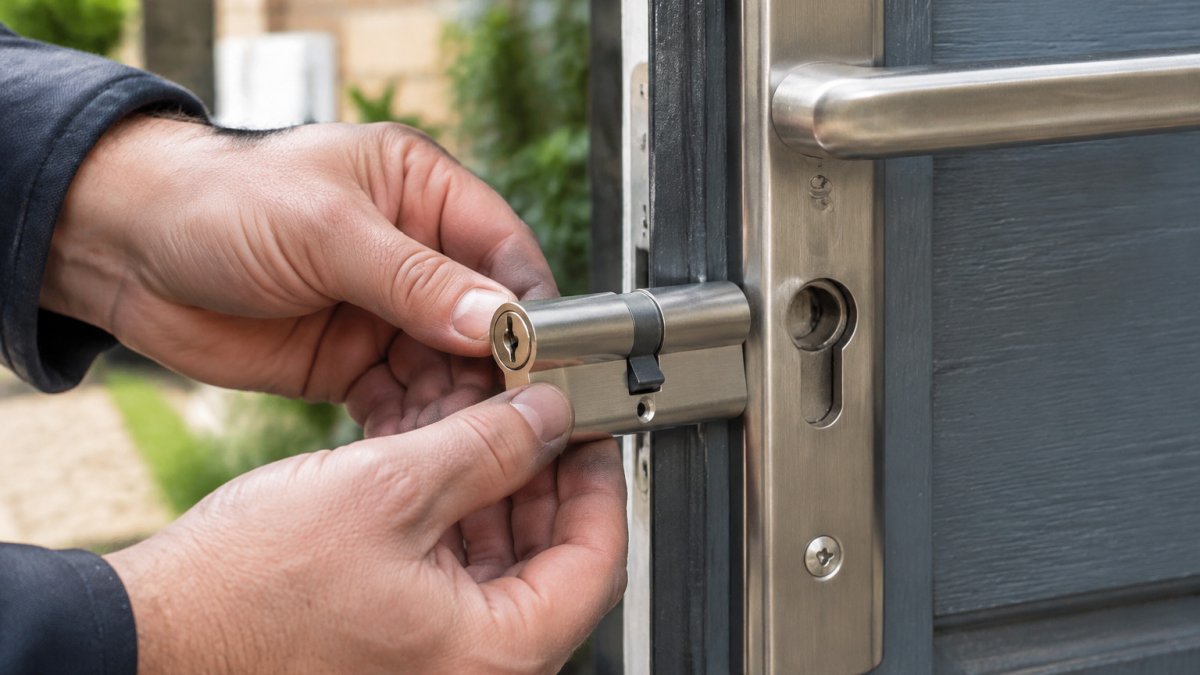
A door lock cylinder is the part of your lock that takes the key. Inside it sits a row of pins that line up when the right key turns, letting the bolt move. For JJ's Glass & Glazing customers in Leicester and Leicestershire, knowing when to replace a door lock cylinder can save a call-out and protect the home.
The average lifespan of a lock cylinder and door mechanism is 10-12 years, according to Garrison Locks guidance on lock lifespan. That figure is based on roughly 2-3 uses a day over a decade. Heavy use, grit and weather can shorten it.
Wear comes from the pins, springs and keyway slowly losing their precision.
Most homes in the UK use a euro cylinder, which fits many uPVC and composite doors. Composite doors in the UK are commonly certified to BS PAS 23/24 standards, a benchmark for door hardware security (UK composite door security standards(https://en.wikipedia.org/wiki/Door)).
Signs a Door Lock Cylinder Needs Replacing
Most guides tell you how to swap a cylinder; far fewer tell you when it is genuinely due. Use the checklist below as a diagnostic, not a menu, one mild symptom is usually maintenance, while two or more together point to replacement.
Key and turning symptoms
- The key needs jiggling, lifting or a particular wiggle to catch the pins.
- The key turns stiffly at one point in its arc rather than smoothly throughout.
- The key feels loose in the keyway, or you can withdraw it in a partly turned position.
- The key blade shows visible wear, rounded bitting edges, a polished shine along the cuts, or a bend when sighted along its length.
- The lock occasionally spins without throwing the bolt, or the bolt throws only partway.
Cylinder and door symptoms
- Brass or metal dust, or dark graphite-like residue, collects around the keyhole or on the door furniture.
- The cylinder sits proud of the door face, has dropped slightly, or rocks when you press it.
- The retaining screw on the door edge is loose, stripped, or has been overtightened so the cylinder binds.
- The door has dropped on its hinges, so the bolt no longer lines up cleanly with the keep, often misread as a lock fault.
Security-trigger symptoms
- The cylinder protrudes more than a few millimetres beyond the door face, giving a snap attack something to grip.
- There is scoring, drilling damage or a distorted keyway around the cylinder, signs of an attempted attack rather than wear.
- You have lost keys and cannot account for every copy, or a previous occupier may still hold one.
- The cylinder carries no visible security marking and the door is on a readily accessible elevation.
How to weigh the signs
A single mild symptom, slight stiffness, a little key wear, usually responds to cleaning and dry graphite lubrication. Two or more symptoms, or any security-trigger symptom, justify replacement rather than another repair. A cylinder that has been attacked, however superficially, should be replaced even if it still functions: internal damage to pins or the cam often shows up weeks later as a sudden failure.
Watch out: stiffness that appears only in cold or damp weather is often door movement or a swollen timber leaf rather than cylinder wear, check the bolt alignment with the door open before condemning the lock.
Door Lock Cylinder Stiff or Difficult to Turn: Repair or Replace?
A stiff lock is often a cleaning or lubrication problem first. Try a dry graphite lubricant in the keyway. Avoid oil-based sprays, which attract dirt.
If the key still struggles after lubrication, the pins or cam mechanism may be worn. At that point, replacing the cylinder is usually more reliable than repeated repairs.
Some experienced fitters note that a lock working smoothly may not need replacing, even when older than 15 years, as long as it has not been compromised (EXTERNAL_LINK: TDCHinges guidance on older locks | tdchinges.co.uk).
Euro Cylinder Lock Size and Measurement
Euro cylinders are sized by the distance from the centre of the keyway to each end of the barrel. A common format is 35/35 or 40/45, written as "internal/external." Measure the door thickness and check the existing cylinder before buying a replacement.
Get the length right. A cylinder that is too long can stick out and get snapped off. One that is too short will not engage properly.
Step-by-Step: Measuring and Removing an Old Cylinder
Follow these steps to remove the old cylinder safely:
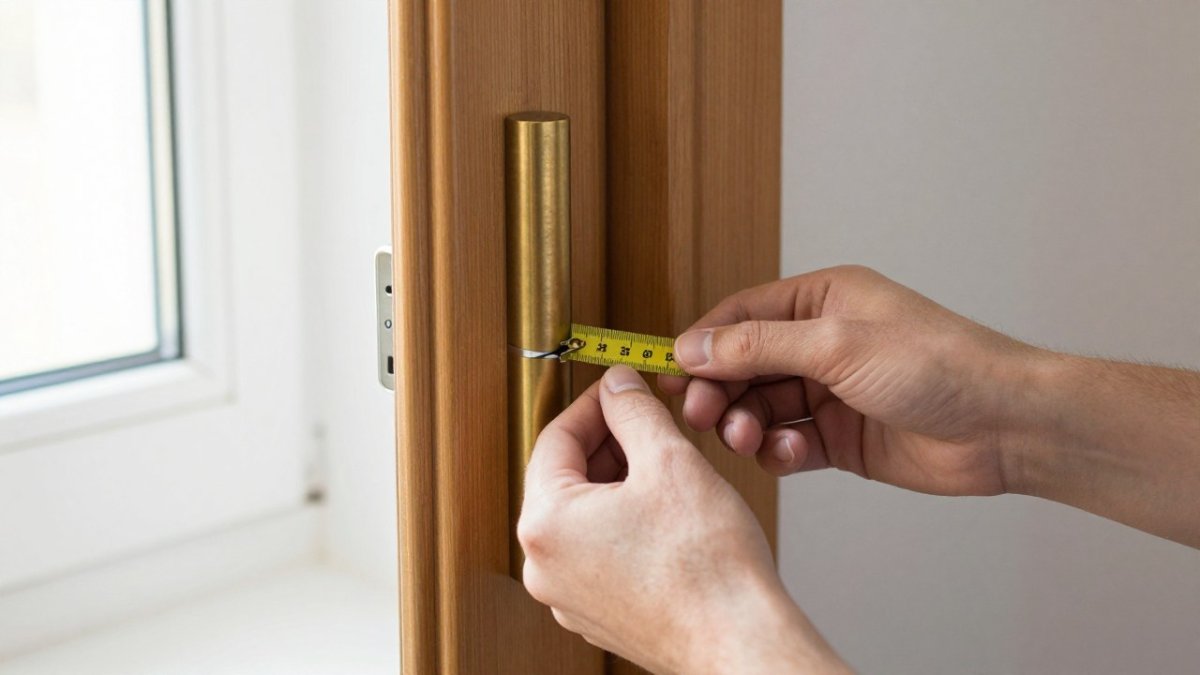
- Open the door and check the lock is in the unlocked position.
- Measure the cylinder from the centre of the keyway to the inside face of the door.
- Measure again from the centre of the keyway to the outside face.
- Note the cam position and whether the cylinder has a thumb turn.
- Remove the retaining screw on the edge of the door.
- Pull the cylinder out gently.
- Check the cam sits correctly before fitting the new unit.
Tools You Will Need
- Screwdriver or drill with the right bit
- Tape measure
- Replacement euro cylinder in the correct size
- Dry graphite lubricant
The removal process follows a clear sequence, with measurements to take before buying a replacement.
| Step | What to do | Note |
|---|---|---|
| 1 | Open the door and check the lock is unlocked | Before any work |
| 2 | Measure keyway centre to inside face | Internal length |
| 3 | Measure keyway centre to outside face | External length |
| 4 | Note cam position and any thumb turn | Match on replacement |
| 5 | Remove the retaining screw on the door edge | Edge of door |
| 6 | Pull the cylinder out gently | Do not force |
| 7 | Check the cam sits correctly before fitting | Before fitting new unit |
Anti-Snap Euro Cylinder Upgrade: Is It Worth It?
Whether an anti-snap upgrade is worth it depends on the door, its location and the furniture already fitted.
Understanding the star ratings
- 1-star cylinder plus 2-star furniture gives a 3-star overall rating. This is the common route where handles are being replaced at the same time.
- 3-star cylinder on its own achieves the top rating without relying on the furniture, and is the simpler choice when the existing handles are staying.
- 1-star cylinder alone offers basic resistance and is the minimum many insurers and specifiers now expect, but it is not the top tier.
What anti-snap actually does
Snapping exploits a cylinder that protrudes from the door face: an attacker grips the exposed end and breaks it off, then reaches the cam to throw the lock. The protection depends on the cylinder not protruding, so measuring correctly matters as much as the rating.
When the upgrade is clearly worth it
- The door is on an accessible elevation, side gate, rear garden, or facing a footpath.
- The existing cylinder is unbranded, unmarked, or visibly protrudes.
- You have had an attempted break-in, or neighbouring properties have.
- You are replacing the cylinder anyway: the incremental cost of a rated unit over a basic one is modest relative to the call-out.
When it is less clear-cut
If the door is a flat-entrance door in a managed building with a door-entry system, or the cylinder is already a marked 3-star unit in good condition, the security gain from swapping is small. In that case, spend the money on correct sizing and fitment instead.
Watch out: an overlong cylinder can undermine snap resistance, so check the length before buying.
Troubleshooting After Installation and Common Mistakes
A few errors come up again and again after a cylinder swap:
- Fitting a cylinder that is too long, so it protrudes
- Tightening the fixing screws unevenly
- Forgetting to check the cam aligns with the latch
- Skipping lubrication on the new cylinder
If the new lock feels stiff, remove it and check the cam first. Most problems come down to alignment or length.
Booking a Lock Check or Replacement With JJ's Glass & Glazing
If you are unsure whether your cylinder needs replacing, JJ's Glass & Glazing can check it for you. Our team works across Leicester and Leicestershire on high security door locks and window and door hardware. Quotes are free and there is no obligation. Request a quote and we will advise on the right option for your home.
Frequently Asked Questions
When should you replace a door lock cylinder?
Replace a door lock cylinder when it shows clear wear or failure, such as a key that sticks or needs force, a cylinder that feels loose, or a lock that no longer engages reliably. Cylinders typically last 10-12 years with regular use, based on roughly 2-3 locking cycles a day. Age alone is not always a reason to replace a lock that still works smoothly and has not been compromised.
Should you replace a lock cylinder after losing a key?
If a key is lost and there is any chance it could be found by someone who knows your address, replacing the cylinder is the safer choice. Replacing only the cylinder is usually enough, as it typically resolves the issue without changing the whole handle set. JJ's Glass & Glazing can advise on the right replacement; contact the team for a quote.
Can you replace a Euro cylinder without changing the whole lock?
Yes. Most Euro cylinders are held by a fixing screw on the edge of the door, so the cylinder can be swapped without replacing the handle set or multipoint mechanism. Measure the cylinder length and check the door thickness before buying, as the correct size matters. Pricing depends on the lock type, quantity and any upgrade, so JJ's Glass & Glazing can confirm current costs on request.