 ultimate-guide
High Security Window Locks Installation: Complete Guide
Table of Contents
- Why High Security Window Locks Installation Matters
- Window Lock Types and Security Devices Explained
- Most Secure Window Locks: Standards and Independent Ratings
- uPVC Window Locks: Multipoint, Shootbolt and Hinge-Side Security
- Sash Window Locks: Securing the Top and Bottom Sash
- Retrofitting Window Security Locks: Compatibility and Pre-Installation Checks
- Step-by-Step Window Lock Installation by Window Type
- Common Installation Mistakes, Troubleshooting and When to Hire a Locksmith
- Frequently Asked Questions
Last Updated: October 19, 2026
Why High Security Window Locks Installation Matters
Window locks installation is the single most cost-effective security upgrade most properties can make.
The Metropolitan Police crime prevention guidance is blunt about this. That is the whole logic of high security window locks installation: you are not building a fortress, you are removing yourself from the shortlist.
Below, we break down every lock type, the standards that matter, and how to fit them by window type, because not all windows are the same problem.
Window Lock Types and Security Devices Explained
Window locks are mechanical devices that fasten a moving sash or casement to its frame, and they divide into a small number of families worth understanding before you buy anything.
- Key-operated locks: the strongest common option, requiring a key to open. Fit these wherever a window is reachable from ground level or a flat roof.
- Cockspur handles: the standard uPVC handle with a push-button release. Convenient, but the weakest link on an older frame.
- Espagnolette and multipoint systems: a handle drives a bar or series of locking points along the frame. Far more resistant to levering than a single catch.
Key-Operated Locks and Opening Restriction
A key-operated lock is the baseline for any window an intruder could physically reach. The critical detail is opening restriction: a lock that secures the handle but lets the window be forced open a few centimetres is doing half a job. Good hardware clamps the sash tight to the frame with no play, and restrictors cap the gap at roughly 100 mm to prevent falls.
Most Secure Window Locks: Standards and Independent Ratings
The most secure window locks carry independent certification, not a manufacturer's claim on the packaging. This section names the standards and explains what each one actually tests, so you can compare products on evidence rather than adjectives.
The standards that matter for window hardware
- BS 3621 is the long-established British Standard for thief-resistant locks. It is most closely associated with door locks, but many insurers and locksmiths still use it as the reference point for "BS-rated" hardware.
- BS EN 1627 is the European standard for burglar resistance of windows, doors and shutters. It grades products from RC1 to RC6, with RC2 the level most commonly specified for domestic windows in the UK, reflecting how long a product resisted a defined attack in a laboratory.
- BS EN 1303 covers cylinder locks and classifies them by key security features, including resistance to drilling, picking and bumping. If a window lock uses a cylinder, this is the standard that tells you how good that cylinder is.
How independent testing actually works
A product claiming burglar resistance should have been tested by a UKAS-accredited test house, a laboratory accredited by the United Kingdom Accreditation Service to carry out the test to the relevant standard.
A certified lock fitted properly outperforms an expensive uncertified one fitted badly. The rating tells you the hardware survived a lab attack; the fitting determines whether it survives one on your window.
Reading a specification sheet without being fooled
A few practical checks when comparing products:
- Look for the standard number and the grade, not just the word "certified". "Tested to BS EN 1627 RC2" is useful; "security tested" is not.
- Check whether the certificate covers the whole product or only a component. A certified cylinder in an uncertified handle is only as strong as the handle.
- Ask for the test house name. A certificate from an accredited laboratory can be verified; a manufacturer's own declaration cannot.
The police-preferred route
The Secured by Design police initiative maintains lists of products that have met the relevant tests, and it is the quickest way to separate genuine security hardware from decorative metal. Secured by Design is the police-owned initiative that licenses products meeting specified security standards, so a product carrying its mark has been independently assessed against a published specification. For a homeowner, that mark is a shortcut through the marketing claims.
Certification is a starting filter, not a guarantee. Match the grade to the risk, RC2 is a sensible domestic baseline for accessible windows, and spend the remaining effort on correct fitting and a sound frame.
uPVC Window Locks: Multipoint, Shootbolt and Hinge-Side Security
uPVC windows fail at their weakest point, and on most older installations that is the handle side.
Hinge-side security is the part everyone forgets. A window with a superb handle-side lock and exposed hinge pins can be lifted out of its hinges in seconds. Hinge bolts or dog bolts close that gap. If your uPVC windows have visible hinge pins on the outside, this is the upgrade to prioritise.
Sash Window Locks: Securing the Top and Bottom Sash
Sash windows need two things secured, not one. The bottom sash is the obvious entry point, but the top sash is often left unsecured and is just as reachable from a flat roof or a wheelie bin.
We recommend a dual screw or sash stop on the meeting rails plus sash bolts at the top. This stops the classic attack, forcing the sashes apart at the middle and climbing through the gap, and tightens the window against rattles and draughts.
Retrofitting Window Security Locks: Compatibility and Pre-Installation Checks
Retrofitting window security locks works on the vast majority of windows, but only after a compatibility check. Skip it and you end up with a lock that does not fit, a split frame, or a window that no longer closes.
Work through this before buying hardware:
- Measure the frame depth and the width of the sash section where the lock will sit
- Identify the window material: uPVC, timber, or aluminium, as each takes different fixings
- Check the existing locking mechanism and whether the handle can be upgraded or must be replaced
That last point is not optional. Any window serving as a means of escape must remain openable without a key from the inside. Fit locks that allow this, and keep keys accessible near escape windows.
Step-by-Step Window Lock Installation by Window Type
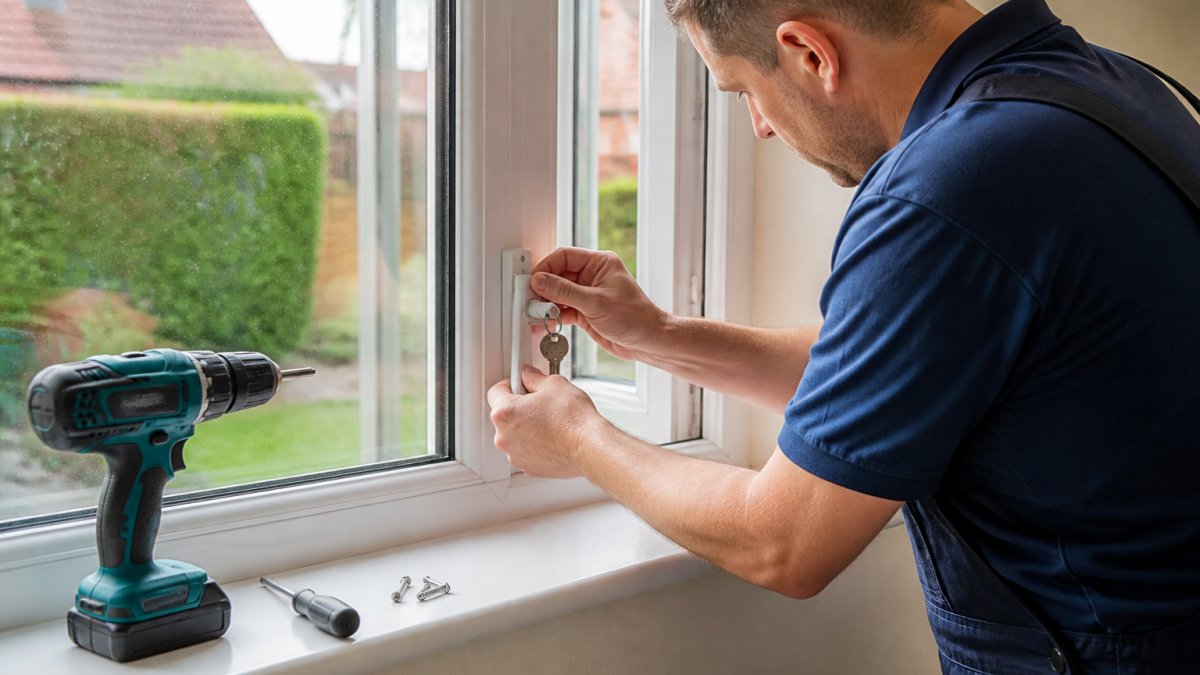
This section gives you the tools, fixing points and checks for each window type, because the difference between a lock that works and one that jams or cracks a frame is in the detail.
Tools and materials to have ready
- A cordless drill with a bit set, including pilot bits smaller than your screws
- A screwdriver that matches the screw heads supplied (usually Pozi or Phillips)
- A tape measure, a pencil and a marking square or straight edge
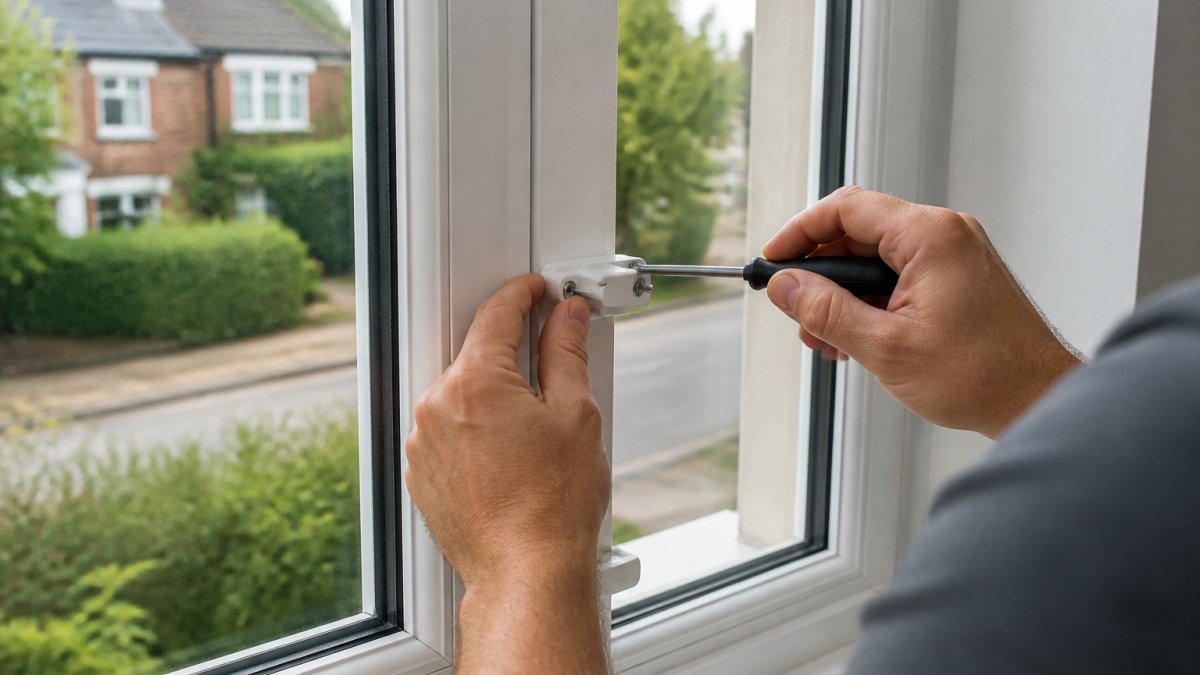
Fitting locks to uPVC windows
- Position the lock where the sash meets the frame, with the window fully closed, checking that the handle or keyway clears the sash edge.
- Mark the fixing holes through the lock body with a pencil. Do not rely on the old holes; they may be out of line.
- Drill pilot holes sized to the screws. uPVC is unforgiving: too large and the screw will not bite, too small and the frame will crack. The pilot bit should be slightly narrower than the screw's core diameter.
- Clear the swarf from the holes before fitting, or the lock will not seat flush.
- Fit the lock and tighten the screws evenly, alternating sides rather than driving one home first.
- Test the handle through several full open-and-close cycles. If the window binds, back the screws off a quarter turn rather than forcing it.
Fitting locks to sash windows
- Fit the meeting-rail fastener first, with both sashes closed and aligned. This is the lock that joins the two sashes at the middle.
- Drill through the inner sash only, then fit the bolt so it engages the outer sash. Check alignment before drilling; a few millimetres out and the bolt will not throw.
- Fit sash bolts at the top into the frame, checking that the bolt throws cleanly into its keeper.
- Test that both sashes still slide freely. Sash windows are sensitive to anything that changes the gap between sashes, so a lock that tightens the meeting rails can make the window stiff.
Fitting locks to timber casement windows
- Check the frame is sound before you start. Timber takes standard wood screws well, but soft or previously repaired timber will not hold them.
- Mark the position and use a bradawl to start each screw hole, which reduces the risk of splitting the grain.
- Drill pilot holes to avoid splitting, especially near the edge of a section.
- Fit the lock so the casement pulls tight against the frame. Where the timber is soft, reinforce the fixing point or the lock will work loose.
Fitting locks to aluminium windows
Aluminium frames are usually thinner-walled than uPVC and timber, so fixings need care. Use the fixings supplied or specified for the frame, avoid over-tightening, and check with the manufacturer if the window is still under warranty, because drilling can affect it.
The final test every installation needs
Before you put the tools away, run this check:
- Open and close the window at least five times and confirm it latches without force.
- Confirm the lock engages fully and the key turns smoothly.
- Check there is no movement between sash and frame when the lock is engaged.
Common Installation Mistakes, Troubleshooting and When to Hire a Locksmith
The most common mistake is misalignment: the lock is fitted a few millimetres off, the window will not close, and the owner forces it until something cracks. Mark, check, then drill.
Other frequent problems:
- Overtightened screws distorting a uPVC frame and stopping the window closing
- Locks fitted to escape windows that then cannot be opened without a key
- Hinge-side security ignored, leaving a well-locked window liftable
If the frame is damaged, the window is out of square, or the property has unusual or older frames, bring in a professional. A locksmith or glazier carries the right fixings and can tell you when the window itself needs attention first.
Frequently Asked Questions
Do window locks actually stop burglars?
They do deter and delay, which is what matters. Most intruders look for an easy opening and move on when a window is visibly locked. A key-operated lock on every accessible window, combined with opening restriction to 100 mm, removes the simple push-and-climb route. No lock is unbeatable, but tested products that resist drilling, picking and snapping raise the time and noise needed, and that is usually enough to send a burglar elsewhere.
What are the most secure window locks?
Look for independently tested locks carrying a recognised security rating rather than a generic 'heavy duty' label. Key-operated multipoint locks on uPVC, shootbolt locks on the handle side, and dual-screw sash bolts on timber sashes all perform well when correctly fitted to a sound frame. The lock is only as good as its installation: a high-rated lock screwed into rotten timber or a loose frame gives little protection. Ask for the test standard before buying.
Can high-security locks be fitted to existing windows?
In most cases yes. Retrofitting window security locks is normal practice on uPVC, timber and aluminium frames, provided the frame is sound and the lock is compatible with the profile. A pre-installation check should confirm the frame material, the opening style, the gap between sash and frame, and whether an existing lock can be replaced or must be supplemented. Odd-shaped or older frames may need a specific fitting rather than a standard one.
Which window locks are suitable for uPVC windows?
uPVC windows usually take handle-side key locks, multipoint locking systems or shootbolt locks, depending on the profile and how the window opens. Check compatibility with the existing handle and espagnolette before buying. A lock that does not align with the profile will not seat properly and can damage the frame. For tilt-and-turn and casement windows, confirm the lock suits the opening direction and that the handle still operates freely after fitting.
Can sash windows be fitted with additional security locks?
Yes. Sash windows benefit from dual-screw sash bolts that join the top and bottom sash, plus a key-operated sash lock at the meeting rail. Fit them where the sashes meet and where the frame is solid, not into filler or decayed timber. Opening restriction to 100 mm on upper-floor sashes also helps with fall prevention and child safety. Check that the bolts do not interfere with the sash cords or the smooth running of the window.
How much does high security window locks installation cost?
Pricing depends on the number of windows, the lock type, the frame material and whether the frames need repair before fitting. Request a free, no-obligation quote with the lock specification and test rating stated in writing, so you can compare like for like rather than a single headline figure.
Windows are the most overlooked entry point on most properties, and the fix is rarely expensive relative to the risk. If you want the job done once and done properly, JJ's Glass & Glazing offers free, no-obligation quotes, high-security locks fitted by experienced tradespeople, and honest advice on whether your frames can take the upgrade. Get started with JJ's Glass & Glazing and secure every accessible opening with hardware that is actually tested.