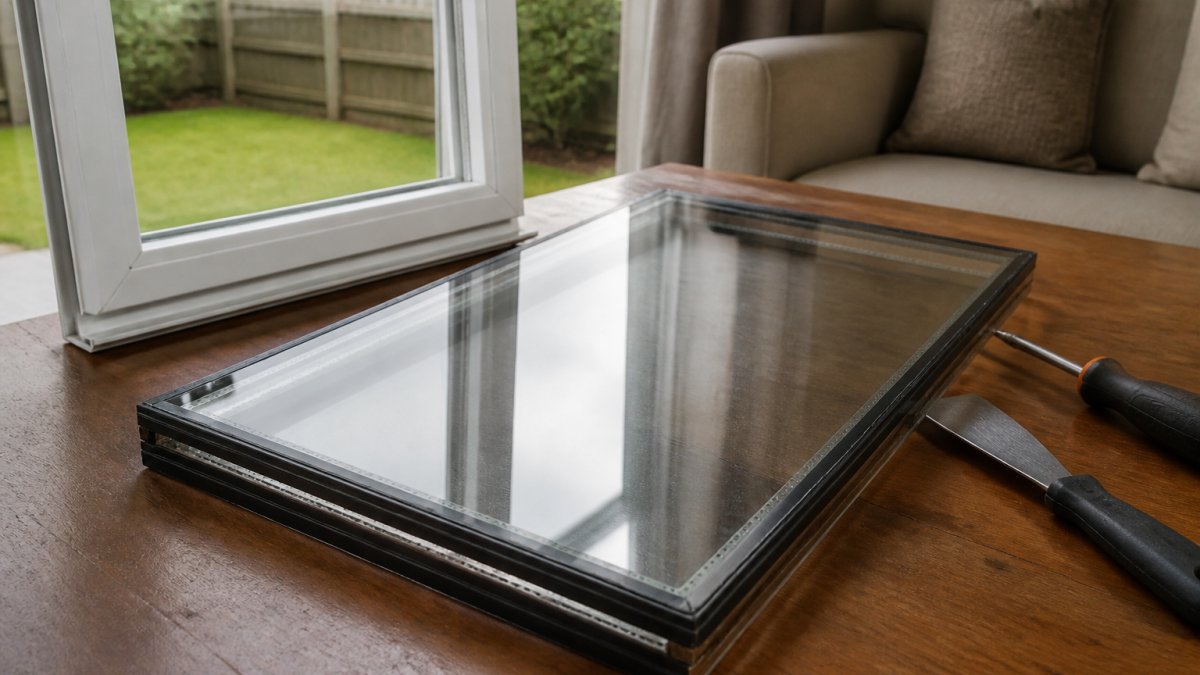
 comparison
Are Window Vents the Best Fix for Condensation?
Last Updated: November 7, 2026
Quick Summary
Window vents are the best fix for everyday condensation caused by trapped moisture, because they provide continuous background ventilation that lowers indoor humidity without opening the window. They cannot fix water trapped inside a failed sealed unit, and they do little in bathrooms or kitchens producing heavy steam without extractor fans.
- Surface condensation wipes off the room side of the glass; water between the panes means a blown seal that vents cannot fix.
- A typical background trickle vent passes roughly 5-15 l/s depending on setting and model.
- Standard slot vents offer around 2,500-5,000 mm² equivalent area, the metric used in Approved Document F.
- Position a retrofit slot in the head or top of the frame, clear of hinges and drainage paths.
- Keep a trickle vent open overnight in bedrooms, since occupants breathe out moisture all night with the door shut.
Table of Contents
- Why Condensation Keeps Coming Back on Your Windows
- The Difference Between Surface Condensation and Blown Seals
- What Window Vents Do and How Background Ventilation Works
- Do Trickle Vents Stop Condensation? What They Can and Cannot Fix
- Comparing the Main Window Vent Options for Condensation Control
- How to Retrofit Trickle Vents to uPVC Windows Safely
- How to Reduce Condensation in a Bedroom
- The Trade-Offs: Heat Loss, Noise and Running Costs
- Choosing the Right Window Vent for Your Home
- Frequently Asked Questions
Why Condensation Keeps Coming Back on Your Windows
Condensation on windows is a moisture problem, not a glass problem. Warm, moist indoor air meets a cold pane, and the water vapour in it turns back into droplets.
The World Health Organization's guidance on indoor air quality-air-quality-and-health) has long linked damp indoor environments with mould growth and poor respiratory health.
They're treating the water they can see, not the air that produced it.
The Difference Between Surface Condensation and Blown Seals
Surface condensation is water on the room-side of the glass, and it wipes away.
If you've noticed condensation inside the double glazing, that's a failed seal, not a ventilation issue. Our guide to misted double glazing units explains how failed units are diagnosed and whether repair or replacement makes sense.
For room-side condensation, the broader fixes for ventilation, heating and moisture are worth reading before you focus on vents alone: how to prevent window condensation covers the full picture.
And if a failed seal is confirmed, we supply and fit replacement double-glazed units for misted or damaged sealed glass.
What Window Vents Do and How Background Ventilation Works
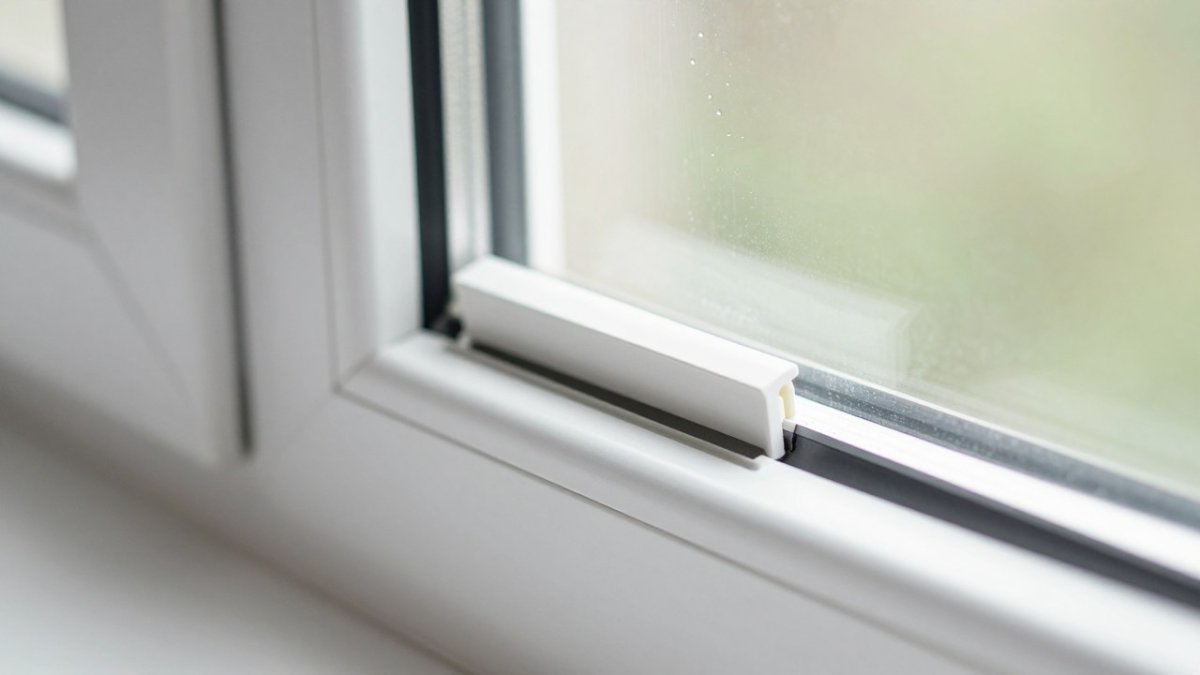
A window vent is a small, permanently openable slot in the window frame that allows a controlled trickle of fresh air in and stale air out, without opening the window itself. That continuous low-level airflow is called background ventilation, and it runs whether or not anyone is home.
The principle is air exchange. Moisture from cooking, showering, breathing and drying laundry builds up in a sealed room. A vent gives that water vapour an escape route before it condenses on cold glass.
Many modern uPVC windows come with a factory-fitted trickle vent slot in the head or frame.
Do Trickle Vents Stop Condensation? What They Can and Cannot Fix
Trickle vents reduce condensation by lowering indoor humidity, but they don't eliminate it. They help most when the cause is trapped moisture in an otherwise sealed room. They do nothing for condensation trapped inside a failed sealed unit, and little in rooms producing heavy moisture with no other extraction.
That distinction is where most advice online falls apart.
What trickle vents can fix:
- Everyday humidity from breathing and light cooking
- Stale air in bedrooms and living rooms
- Mould growth driven by chronic damp air
What they can't fix:
- Blown seals (water inside the glass)
- Heavy steam from bathrooms and kitchens without extractor fans
- Rising damp or structural water ingress
Comparing the Main Window Vent Options for Condensation Control
Most guides stop at "standard, acoustic or powered" and leave you no closer to a decision. The useful comparison is on measurable criteria: how much air a vent passes, how much noise it blocks, and whether it suits the room.
What the specifications actually mean
Equivalent area (EA) is the metric used in Building Regulations Approved Document F to express a vent's effective open area.
Airflow capacity is usually quoted in litres per second (l/s) at a stated pressure difference, often 1 Pa or 2 Pa.
Acoustic performance is quoted as a weighted sound reduction index (Rw) in decibels, sometimes with a spectrum adaptation term (Dn,e,w).
The main vent types compared
| Vent type | Typical equivalent area | Noise reduction | Best for | Main trade-off |
|---|---|---|---|---|
| Standard slot/canopy trickle vent | Around 2,500-5,000 mm² EA depending on model | Low | Most rooms in quiet locations | Visible slot; limited acoustic benefit |
| Acoustic trickle vent | Similar EA to standard, with internal baffles | Moderate (manufacturer-quoted Rw) | Rooms facing busy roads or railways | Higher purchase cost; slightly reduced airflow for the same slot size |
| Humidity-sensitive vent | Similar EA to standard | Low to moderate | Bathrooms and kitchens where moisture varies | Higher cost; needs to be set up correctly |
| Powered/heat-recovery unit | Higher, often quoted in l/s rather than EA | Variable | Persistently damp rooms with no other extraction | Purchase and running cost; needs power |
Standard slot and canopy vents
The common, low-cost option, widely available from suppliers such as BPF Online's trickle vent range. They do the basic job well: continuous background ventilation at minimal expense. The trade-off is less noise control and a visible slot in the frame. For a bedroom on a quiet street, this is usually the sensible default.
Acoustic trickle vents
These add sound insulation to the standard vent design, letting air through while limiting outside noise. Titon's guide to acoustic trickle vents describes them as providing fresh-air circulation while reducing noise intrusion. Best for homes on busy roads where a standard vent would be too noisy to leave open. Check the quoted acoustic rating rather than assuming all "acoustic" vents perform alike, the baffle design and the quality of the seal around the vent make a real difference.
Humidity-sensitive vents
These open and close automatically in response to relative humidity, widening when a bathroom or kitchen is steamy and closing when the air is drier. They suit rooms where moisture production is intermittent and you don't want to rely on remembering to open a vent. The trade-off is cost and correct commissioning; a poorly set sensor can leave the vent permanently open or shut.
Powered and heat-recovery ventilation
Powered units actively manage humidity rather than relying on passive airflow. They cost more to buy and run but suit persistently damp rooms where passive vents aren't keeping up. Heat-recovery versions temper incoming air with outgoing air, reducing the heat penalty, but they need power, ducting and proper installation, so they're a bigger project than a slot vent.
How to choose between them
Work through the criteria in order:
- Room moisture load: a bedroom with two occupants is a different problem from a bathroom with a shower running twice a day.
- Noise exposure: if the window faces a main road, an acoustic vent is worth the premium; if it faces a garden, it usually is not.
- Equivalent area needed: match the vent's EA to the room size and Approved Document F guidance, rather than fitting the same vent everywhere.
Watch out: fitting a high-capacity vent in a small room does not improve condensation control if the moisture source is not addressed, ventilation capacity is a ceiling on what airflow can achieve, not a substitute for extraction and moisture management.
How to Retrofit Trickle Vents to uPVC Windows Safely
Retrofit vents can be fitted to many uPVC windows, but whether a particular frame is suitable needs checking. The frame must have a suitable profile, enough structural strength, and enough clear space between the outer wall and the sealed unit. Cutting a slot into the wrong frame, or in the wrong place, can weaken it, breach the sealed unit, or create a water path into the wall.
What determines whether a frame can take a vent
Three things decide compatibility:
- Profile system and chamber layout: uPVC frames are hollow extrusions with internal chambers. A vent slot has to sit in a chamber that can be cut without compromising strength or drainage. Some profiles have a dedicated vent preparation; others do not.
- Clearance to the sealed unit: the slot must not intrude on the glazing. If the gap between the frame face and the glass is too small, there is nowhere safe to cut.
- Position relative to hardware: hinges, locking mechanisms and espagnolette bars run inside the frame. A slot that crosses them will interfere with operation or weaken the fixing.
If any of these is unclear, the frame is not a safe candidate for a retrofit without a professional assessment. A common pattern is that older or budget frames have less margin than modern ones.
The safe retrofit sequence
A safe retrofit follows a clear sequence:
- Identify the frame profile and confirm it can accept a vent without weakening it
- Check the vent won't interfere with the sealed unit or locking mechanism
- Position the slot in the head or top of the frame, clear of hinges and drainage paths
Where retrofits go wrong
Watch out: cutting into a frame that can't take it is the most common retrofit mistake, and it can void a window's remaining lifespan or its guarantee.
A third failure mode is fitting a vent with the wrong equivalent area for the room. A vent that is too small won't deliver enough background ventilation to control humidity, and the household concludes that "vents don't work" when the real issue was sizing.
When to call in a professional
Consider a professional assessment if any of the following applies:
- The frame profile is unknown or the window is old enough that spares are hard to source
- The window is a tilt-and-turn, pivot or other non-standard opening type
- The proposed slot would be close to a hinge, lock or the edge of the glazing
For anything structural, get it assessed first. If you're sourcing fittings for the job, our window and door hardware range covers handles, hinges and replacement parts, but the frame assessment itself is a separate question from the hardware.
Retrofit versus replacement
If the existing windows are old, single-glazed or already misted, a retrofit vent may be throwing good money after bad. Replacement units with factory-fitted trickle vents are often more sensible, because the vent preparation is designed into the frame rather than cut in afterwards. Our guide to misted double glazing units explains how failed units are diagnosed, and we supply and fit replacement double-glazed units where replacement makes more sense than retrofit.
How to Reduce Condensation in a Bedroom
Bedrooms are condensation hotspots because occupants breathe out moisture all night with the door shut. The fix combines ventilation with small habit changes.
- Keep a trickle vent open overnight, even in cold weather
- Leave the bedroom door ajar to allow air circulation
- Dry laundry elsewhere, or ventilate the room heavily if you can't
The goal is to stop moisture levels climbing overnight. A vent left open does more for this than an hour of open-window airing in the morning.
The Trade-Offs: Heat Loss, Noise and Running Costs
Every vent is a small hole in your thermal envelope, and that's the honest trade-off.
Noise is the second cost. A standard vent on a busy road lets sound in; acoustic vents address this at a higher price.
None of these trade-offs make vents a bad idea. They make the right vent a decision, not a default.
Choosing the Right Window Vent for Your Home
Match the vent to the room, not to a generic recommendation. A quiet bedroom on a side street needs a different answer from a steamy bathroom or a front room facing traffic.
- Bedrooms on quiet streets: standard trickle vent, kept open overnight
- Rooms facing busy roads: acoustic trickle vent to control noise
- Bathrooms and kitchens: extractor fan first, vent as backup
When you're ready to act on the recommendation, request a quote for a no-obligation assessment of your windows.
Condensation that keeps returning usually means moisture has nowhere to go, and the right window vent gives it an exit without opening the window wide.
Frequently Asked Questions
Do trickle vents actually help prevent condensation on windows?
They help in the right circumstances. Trickle vents provide background ventilation, letting a steady trickle of fresh air in and stale, moist air out so water vapour is less likely to settle on cold glass. They work best in rooms with a genuine moisture source, such as a kitchen or bathroom, and when kept open rather than shut. They will not fix condensation caused by blown double-glazed seals, where moisture sits between the panes, or by a room with no heating at all.
Which window vents are best for condensation control?
There is no single best type, because the right choice depends on the room. Standard slot vents are the cheapest and simplest for kitchens and bathrooms. Acoustic trickle vents suit bedrooms or rooms facing a busy road, where noise would otherwise make you close the vent. Powered options such as heat-recovery units suit homes with persistent humidity that passive vents cannot shift. Ask a glazier to assess each room before deciding, since vent size and placement matter as much as the type.
Can you retrofit trickle vents to existing uPVC windows?
Yes, in most cases. A glazier can cut a ventilation slot into the frame or, where the frame profile allows, fit an over-frame vent without removing the window. The work needs care: cutting into the wrong part of a uPVC profile can weaken the frame or break the sealed unit. Building regulations also set minimum ventilation requirements, so the installer should confirm the vent meets them. Ask for an assessment before any cutting begins.
Should trickle vents be left open all the time?
Leaving them open gives continuous background ventilation, which is what keeps moisture levels down day to day. Closing them traps humid air and condensation returns, particularly overnight in bedrooms. The main objections are draughts and heat loss, which is why acoustic and baffled vents exist. If a vent makes a room noticeably cold, a smaller vent or a heat-recovery option may suit better than simply shutting it.