 ultimate-guide
Commercial Shop Front Glazing Repairs in Leicester
Last Updated: October 30, 2026
Quick Summary
Commercial shop front glazing repairs cover the diagnosis, repair or replacement of damaged glass, frames, doors and hardware on retail and business premises. At JJ's Glass & Glazing, we handle everything from a single cracked pane to a full shopfront refit across Leicester and Leicestershire. The work splits into faults we can fix on site and faults that need new glass or components.
- A misted double-glazed unit cannot be cleaned; once the seal fails, only replacement restores clarity.
- For a smashed window, make the opening safe, secure the premises, then order the replacement glass.
- Glass in doors and low-level windows should be a safety glass type such as toughened or laminated.
- Check seals and gaskets quarterly and test door closers, hinges and locks monthly.
- Ask for an itemised written quotation that states the glass specification and warranty terms.
Table of Contents
- What Commercial Shop Front Glazing Repairs Involve
- Emergency Commercial Glass Repair Services and Response Times
- Shop Front Glass Replacement: Glass Types and Safety Requirements
- Emergency Boarding Up for Broken Shop Windows
- Shop Front Glazing Maintenance That Prevents Costly Failures
- Doors, Shutters and Security Hardware on Commercial Premises
- What Commercial Glazing Repairs Cost and How to Get a Written Quotation
- Request a Free Survey and Written Quotation
- Frequently Asked Questions
What Commercial Shop Front Glazing Repairs Involve
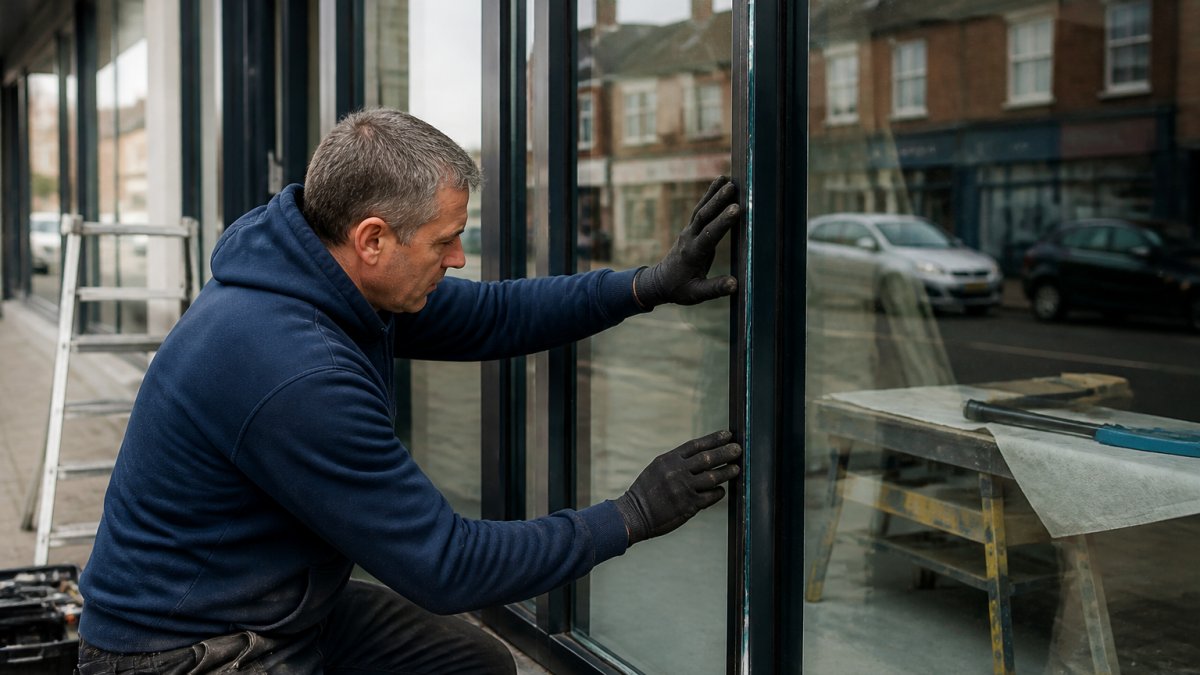
Commercial shop front glazing repairs cover the diagnosis, repair or replacement of damaged glass, frames, doors and hardware on retail and business premises.
The UK glazing sector had 2,818 businesses in 2025, up 0.5% on 2024, according to IBISWorld's glazing services industry data. That competition makes it easy to overpay for poor work. Knowing what a repair actually involves is your best protection.
The Most Common Shop Front Faults
Most call-outs come down to a short list of failures:
- Cracked or shattered panes from impact, vandalism or thermal stress
- Misted double-glazed units, where the seal has failed and moisture sits between panes
- Jammed or dropped doors caused by worn hinges, swollen frames or failed closers
A common mistake is treating a misted unit as a cleaning problem. It isn't. Once the seal breaks, the unit is finished and only replacement restores clarity.
Repair or Replace: How the Decision Is Made
A single cracked pane in an otherwise sound frame is usually a straightforward glass replacement. A unit that has misted repeatedly, or a frame that has corroded or distorted, usually points to replacement.
The deciding factors are age, frame condition, glass type and whether the fault is isolated or systemic. Replacing one pane in a failing system just moves the problem along.
Emergency Commercial Glass Repair Services and Response Times
Emergency commercial glass repair services exist to make a damaged premises safe and secure quickly, then complete a permanent repair. Read about emergency glazier response times to know what to expect.
For a smashed window, the priority order is: make the opening safe, secure the premises, then order the replacement glass.
Watch out: leaving a broken shopfront unsecured overnight invites theft and, if someone is injured, leaves you exposed.
Shop Front Glass Replacement: Glass Types and Safety Requirements
Shop front glass replacement must use the right glass for the location, not just the cheapest pane that fits. Glass in doors, low-level windows and areas at risk of human impact should be a safety glass type. Toughened and laminated glass both meet that requirement in different ways: toughened breaks into small blunt pieces, laminated holds together on a plastic interlayer.
When Each Glass Type Is the Right Choice
- Toughened glass is heat-treated to resist impact and breaks into granular pieces rather than shards. It is commonly used in shopfront doors, full-height glazing and areas where a clean break pattern matters. It cannot be cut or drilled after toughening, so every opening must be measured precisely before the order is placed.
- Laminated glass holds together when broken because of its plastic interlayer. That makes it a common choice where security and containment matter, for example, ground-floor windows that could be attacked, or overhead glazing where falling fragments would be a hazard.
- Laminated toughened combinations are used where both impact resistance and post-break integrity are needed.
A common mistake is assuming any thick pane is safety glass. Thickness is not the same as safety performance. The specification should be stated on the quotation and, where relevant, on the glass itself.
How Safety Glazing Requirements Affect the Replacement
Safety glazing rules apply to critical locations, doors, glazing adjacent to doors, low-level glazing and areas where people could fall against the glass. In practice, this means the replacement pane must be a safety glass type, and the frame and fixings must be suitable for the weight and behaviour of that glass. A frame that was designed for a thin annealed pane may not be appropriate for a heavier laminated unit without checking.
The Replacement Sequence
A permanent shop front glass replacement usually follows a predictable order:
- Site assessment. Confirm the opening size, frame condition and glass specification, and check access.
- Temporary security. Board or otherwise secure the opening if the permanent glass is not available immediately.
- Measurement and order. Glass is cut or ordered to size; toughened and laminated units cannot be adjusted on site.
- Removal and disposal. The damaged glass is removed safely and taken away.
- Installation. New glass is set, sealed and checked for alignment and weathertightness.
- Handover. Locks, closers and hardware are tested, and the warranty terms are confirmed.
Thermally efficient glazing matters too. A failed unit wastes energy every trading hour.
Emergency Boarding Up for Broken Shop Windows
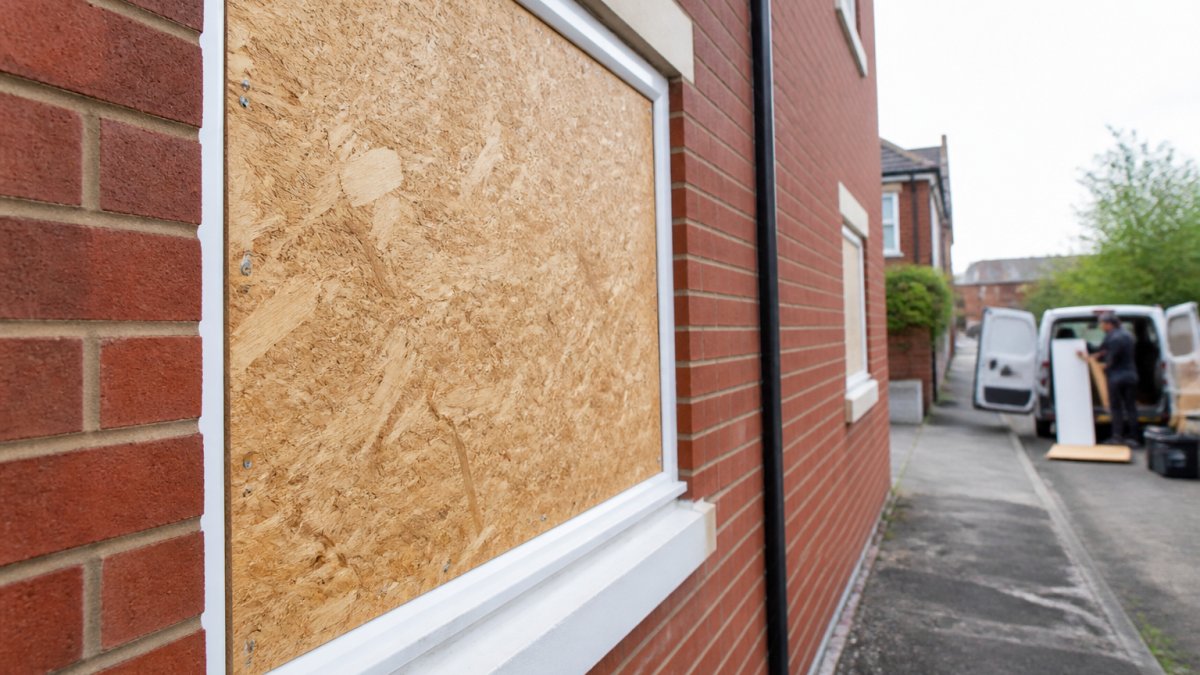
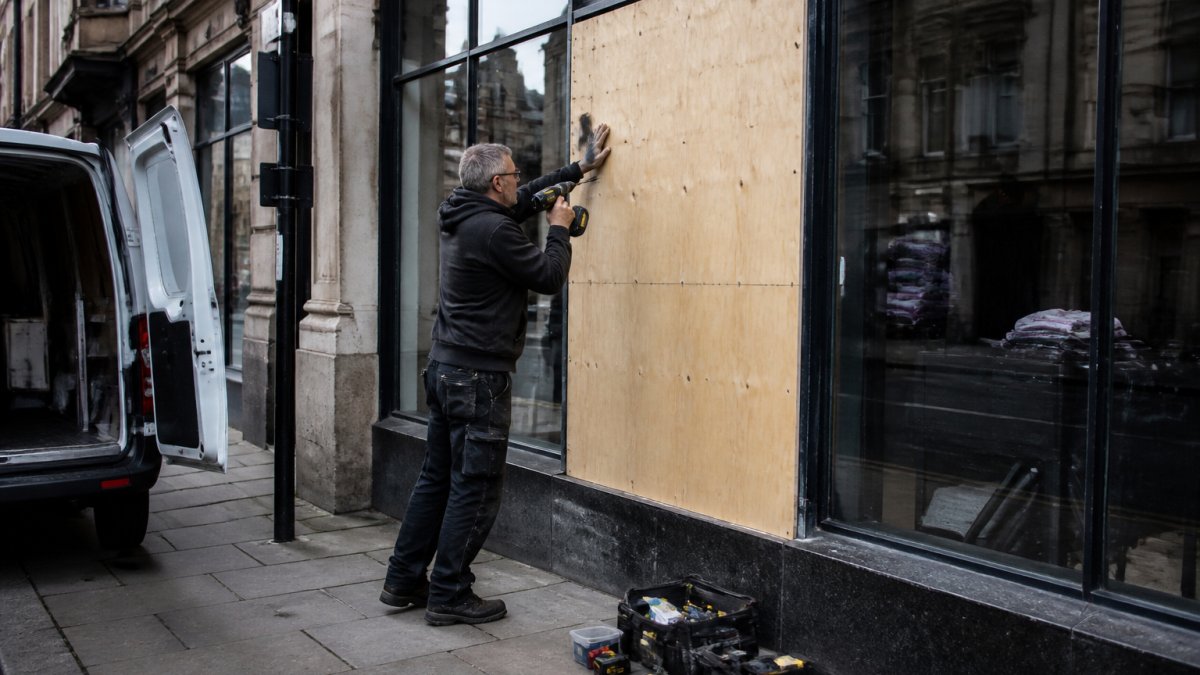
Emergency boarding up for broken shop windows is the immediate step that secures a premises until permanent glass can be fitted.
Boarding is a temporary measure, not a repair. Our guide to emergency window boarding services explains how the process works.
Shop Front Glazing Maintenance That Prevents Costly Failures
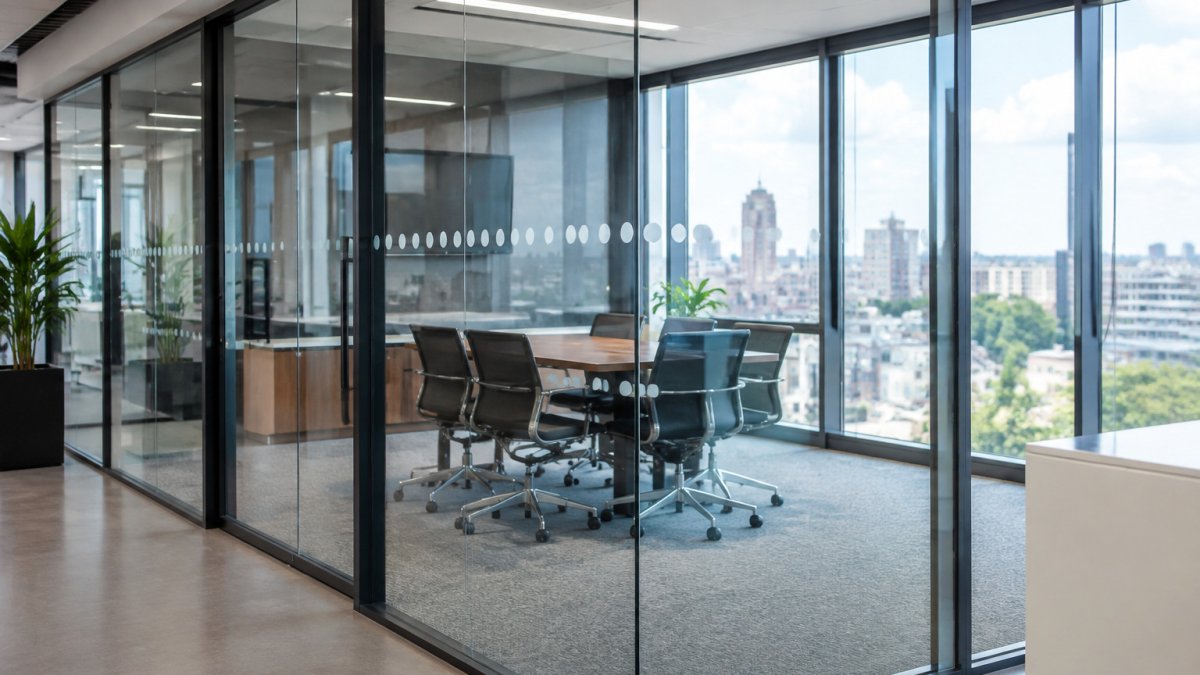
Shop front glazing maintenance is the cheapest repair you'll ever do, because it stops failures happening. A short inspection routine catches the problems that turn into emergency call-outs. See our commercial office glazing maintenance tips for practical schedules and cleaning methods.
- Check seals and gaskets quarterly for cracking or shrinkage
- Look for misting between panes, the first sign of a failed unit
- Test door closers, hinges and locks monthly
- Clear frames and drainage channels of debris
A chip left alone can become a shattered pane; a stiff door can become a dropped one.
Doors, Shutters and Security Hardware on Commercial Premises
Doors, shutters and security hardware are where many security failures start. A shopfront door that won't close properly, a broken handle or a faulty lock is an open invitation.
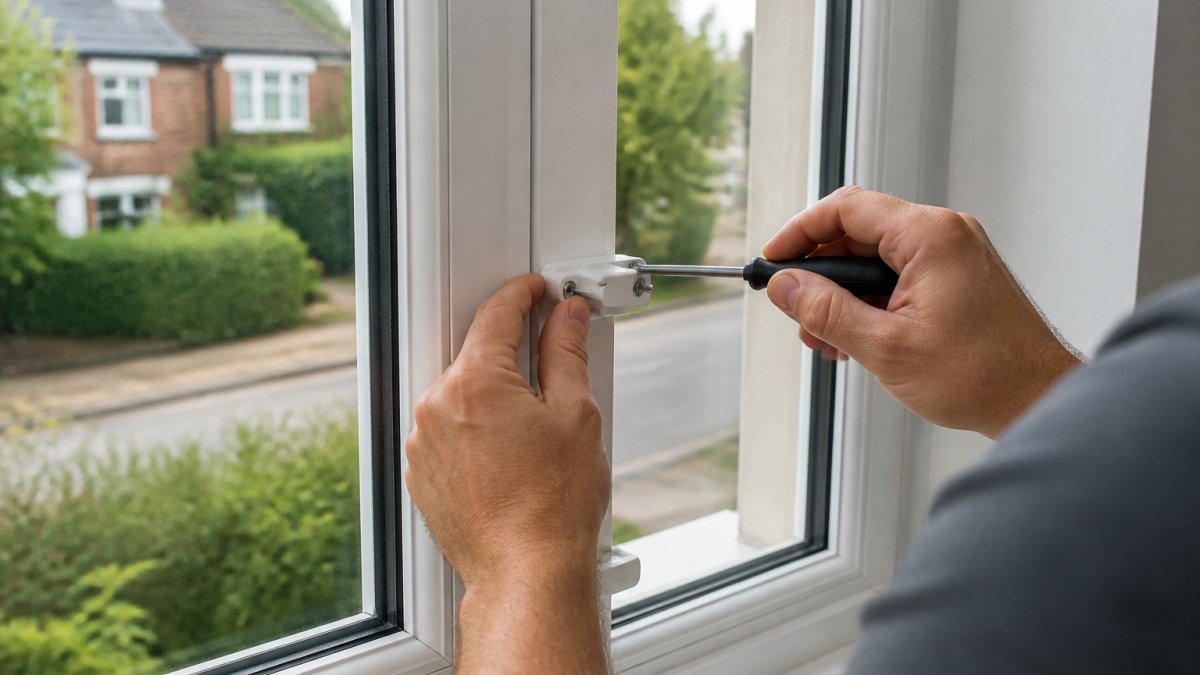
Handles, hinges and locks are a key part of door security on commercial premises. If a lock is the weak point, upgrading it is far cheaper than the loss from a break-in.
What Commercial Glazing Repairs Cost and How to Get a Written Quotation
Commercial glazing repair costs depend on the glass type, the size of the opening, access, and whether the work is an emergency call-out or a planned job. Pricing depends on the glass type, size of the opening, access and the nature of the job, so we provide a quote for each premises.
The Main Cost Drivers
- Glass type and specification. Toughened, laminated and other specialist glass types carry different costs.
- Size and weight. Oversized panes need more handling, more people on site and sometimes a crane or vacuum lifter. That labour is a real part of the quote.
- Access. A ground-floor high street window is quick to reach. A first-floor frontage, a recessed entrance or a unit above a canopy adds access equipment and time.
- Emergency versus planned. Out-of-hours call-outs, weekend attendance and rapid response carry a premium because they disrupt scheduled work and require standby labour.
What a Written Quotation Should Show
A commercial glazing quotation is best itemised rather than a single lump sum. Ask for the following to be set out separately:
| What to ask | Why it matters |
|---|---|
| Is the quote written and itemised? | Stops surprise add-ons later |
| Is glass type and spec stated? | Confirms you're getting safety glass |
| Is the call-out charge separate? | Emergency work often carries one |
| Is there a survey before quoting? | Prevents underpricing and rework |
| What's the expected timescale? | Keeps your premises trading |
| Is making good and disposal included? | Avoids a second invoice for waste removal |
| Are warranty terms stated? | Clarifies what happens if the unit fails |
Ask for any quote in writing.
Insurance Documentation and Claims
If the damage was caused by break-in, vandalism or a vehicle strike, your insurer will usually want evidence before it settles. A common pattern is to ask for:
- Photographs of the damage before anything is moved or boarded
- A written repair quotation or invoice that states the glass specification
- A record of the temporary boarding cost, if it was needed to secure the premises
- The date and time the damage was discovered, and any crime reference number
Keep the boarding invoice separate from the permanent repair invoice. Insurers often treat them as distinct items, and a combined invoice can slow the claim.
The UK commercial glazing market was estimated at £2.2 billion in 2025 with annual growth of 1%, according to Barbour ABI's commercial glazing market data. A market that size has plenty of operators, so insist on a proper written quotation and keep the paperwork your insurer will ask for.
Request a Free Survey and Written Quotation
We'd rather survey your premises than quote blind. A free survey lets us identify the fault, confirm the right glass specification and give you a written quotation with no obligation. Request a quote and we'll arrange a visit.
JJ's Glass & Glazing brings years of trade experience to every job, covering emergency glazing, replacement double-glazed units and high-security locks for homes and businesses across Leicester and Leicestershire.
Frequently Asked Questions
What should I do if my shop front glass is broken?
Keep people away from the damaged area and do not try to remove broken glass yourself. If the shop is insecure, arrange emergency boarding up for broken shop windows straight away, then book a glazier to measure and replace the pane. Photograph the damage before anything is moved, and check whether your insurer needs notification before repairs start. A glazier will usually assess the frame and glass type on site before confirming whether a like-for-like replacement is possible.
Can a damaged shop front window be repaired, or does it need replacing?
It depends on what has failed. A single cracked or shattered pane in a sound frame is normally a straightforward glass replacement. Damage to the frame, a failed sealed unit with misted double glazing, or a door that no longer closes properly may need more involved shop front repairs. A glazier will diagnose the fault first; if the frame is structurally sound, replacing the glass alone is usually the cheaper and faster route.
How quickly can emergency commercial glazing repairs be arranged?
Response times depend on the time of day, your location in Leicester or Leicestershire, and how many callouts are already booked. When you call, give the address, the size and type of glass affected, and whether the building can be secured. That lets the team bring the right materials on the first visit rather than returning later.
How can I secure a shop front after glass has been damaged?
Temporary boarding is the standard short-term fix. Boards are cut to the opening, fixed securely and left in place until replacement glass is fitted. For a glazed door, check that the lock and handles still work once the board is up, and make sure the premises can still be opened for trade if possible. Boarding is a holding measure, not a repair, so book the permanent glass replacement at the same time to avoid a second closure.
What types of glass are used in commercial shop fronts?
Shop fronts commonly use toughened safety glass, laminated glass or sealed double-glazed units, depending on the position and the level of impact risk. Toughened glass breaks into small blunt pieces rather than shards, while laminated glass holds together when cracked. Lower panels and doors usually need safety glass. The right choice also affects thermal performance, so it is worth asking about thermally efficient glazing when a unit is being replaced anyway.
What information should I provide when requesting a commercial glazing repair?
Give the full address, a contact number and the best time to access the property. Describe what has failed: a cracked pane, a misted unit, a jammed door, faulty locks or broken handles. State roughly how wide and tall the affected glass is, and send photos if you can. Mention whether the premises are open to the public and whether you need emergency boarding up for broken shop windows. Clear details mean a more accurate written quotation and fewer return visits.